Smoke Testing vs Load Testing vs Stress Testing vs Spike Testing vs Soak Testing
Smoke Testing: A preliminary test to ensure the most important functions of an application work correctly. The term originated in hardware and electronics: engineers would power on a new circuit or device, and if it literally started smoking, they knew something was fundamentally wrong
Why Smoke Testing: Prevents wasting time on deeper tests when the basic functionality is already broken. Test Basic Functional Requirements are met. I.E. Can you log in, view your balance, and make a simple transaction
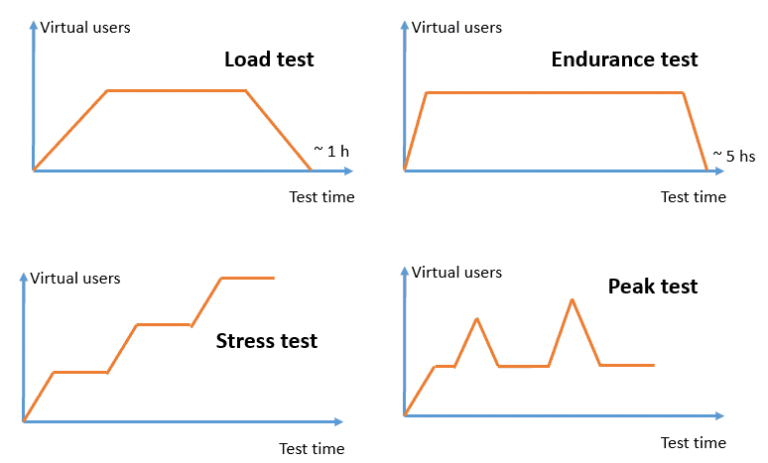
Load Testing: Must simulate realistic traffic patterns. The goal of load testing is to verify that a system can handle expected user traffic and workload without performance degradation, downtime, or failures. It ensures reliability, responsiveness, and stability under real-world usage conditions.
During normal days, it handles ~10,000 users.A load test simulates this traffic to check if pages load quickly, payments process smoothly, and servers remain stable.If response times spike or errors occur, developers know where to optimize.
Load testing is like a rehearsal for your application for normal day traffic
Stress Testing:The goal of stress testing is to evaluate how a system behaves under extreme or abnormal conditions—pushing it beyond its normal operating limits to identify breaking points, bottlenecks, and ensure the system fails gracefully rather than catastrophically.
Stress testing is about resilience. It ensures that when systems face extreme, unexpected loads, they don’t collapse outright but instead degrade gracefully, recover quickly, and protect data integrity.
Stress testing is like a rehearsal for your application for maximum capacity before performance collapses.
Soak Testing(Endurance Test):The goal of a soak test (also called endurance testing) is to verify that a system can handle a sustained workload over an extended period of time without performance degradation, resource leaks, or failures.
Soak testing is about endurance. It ensures that your system doesn’t just work well in the short term but remains stable, efficient, and reliable over extended periods of continuous use
Long-running tests reveal issues like memory leaks, file handle leaks, or database connection leaks that don’t show up in short tests.
Spike Testing:The goal is to evaluate how a system reacts to sudden, extreme increases (or decreases) in load. It checks whether the system can handle abrupt traffic surges, recover quickly, and remain stable without crashing or degrading severely.
Soak testing is about endurance. It ensures that your system doesn’t just work well in the short term but remains stable, efficient, and reliable over extended periods of continuous use
Reveals bottlenecks in servers, databases, or network components that only appear during sudden surges. validate Scalability & Elasticity
Sanity Testing: Sanity Testing is narrow, deep, correctness check of specific functionality whereas smoke test is to verify that the basic, critical functionalities of a build work before deeper testing. road and shallow – covers major features at a high level.